New old shutters
Leave a reply


Client wanted a roof access door that matched the age/style of the building. It looks like it has always been there.


The job involved making an opening in the wall installing authentic materials and masonry repairs.
Turn an open porch to a screened porch.
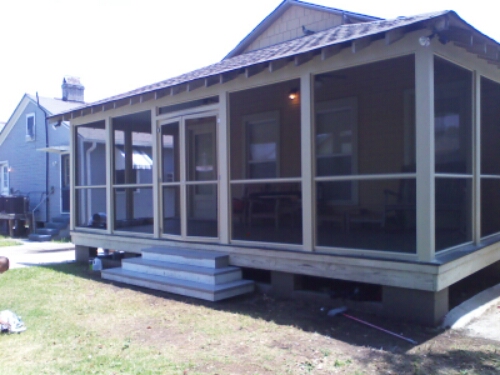
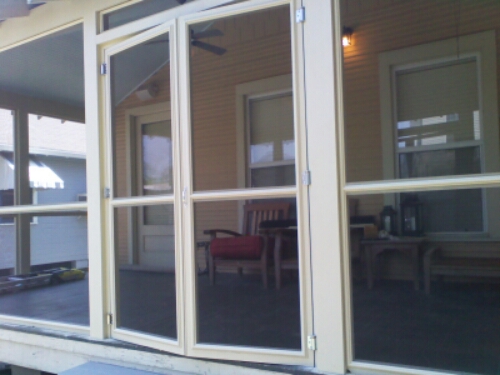
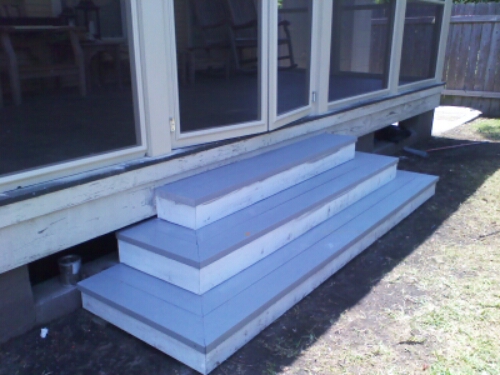
Custom made screen doors and steps.
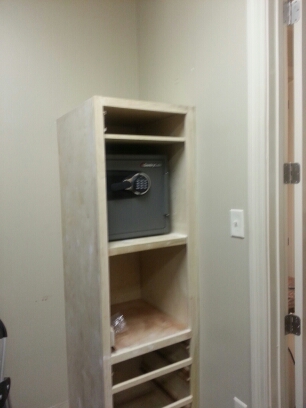
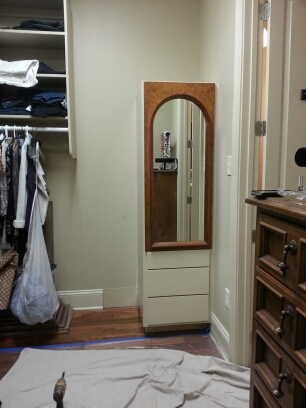
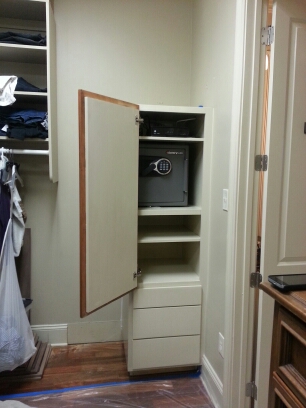
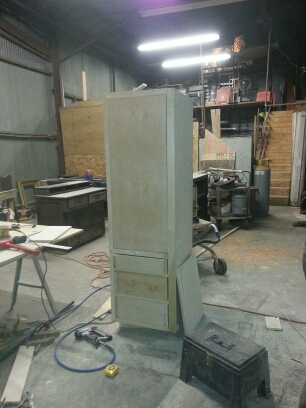
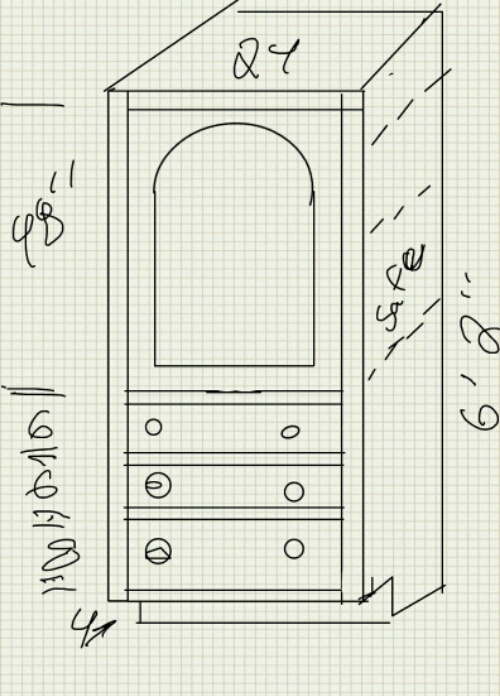
While doing other misc. repairs the client asked if I could install a safe somewhere in a large closet. My solution was to make a cabinet that blends in in the closet and offers a modest level of concealment for the safe. The client had a mirror that they wanted to make use of also.
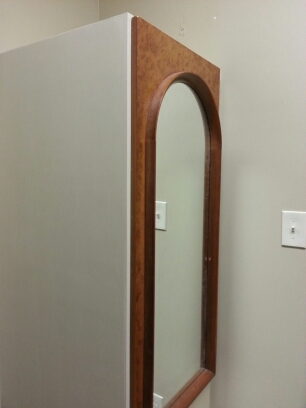
The mirror is mounted flush to the frame and will not open in the closed position.
The mirror must be pulled forward about 2 inches before it will swing open.
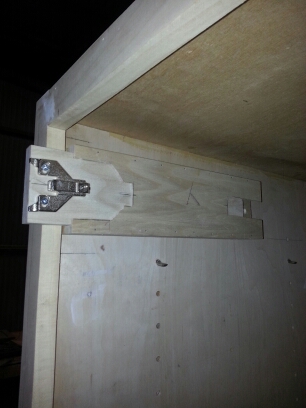
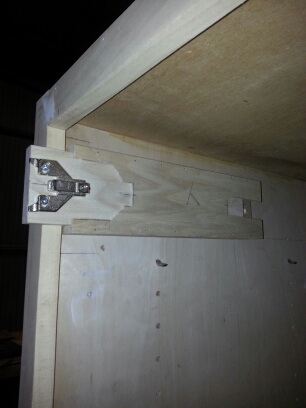
For the mirror/door to work I had to make a special sliding hinge. So far, it seems to work pretty good.
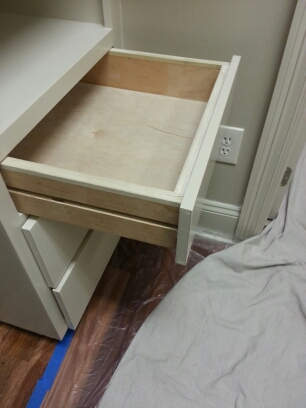
The drawers use a shop made slide rail
Rough cabinet in the shop
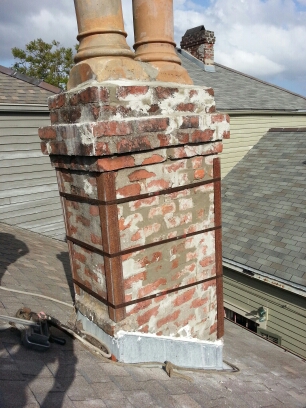
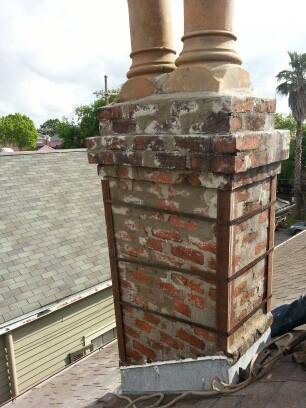
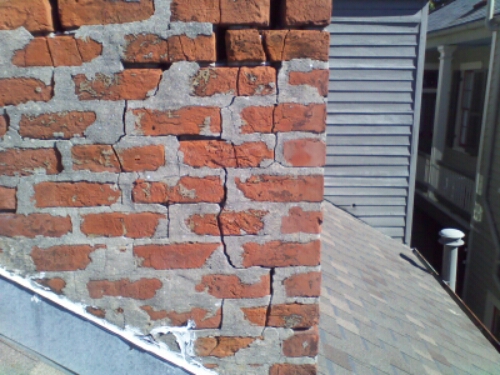
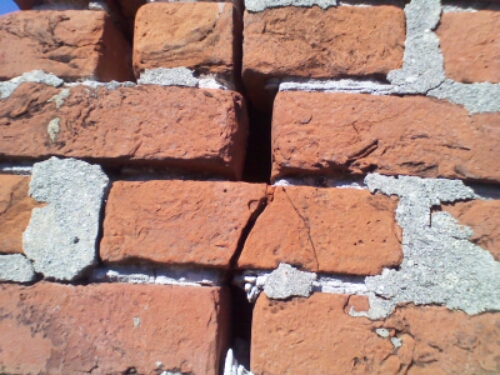
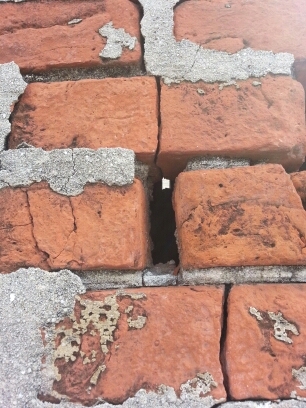
This chimney was in bad shape but the customer didn’t want to rebuild it. So, I came up with this solution:
Repoint the brick, reinforce the chimney with steel angle, and then draw it together with metal pallet strapping.
It looks fairly strong now. I’m not sure how long the strapping will last. I’ll check back in the future to see how this is working out.
The client wanted to have a place for a safe and had a mirror that they wanted hung. They also had some other painted shelves in this area. I came up with the idea to make a cabinet that would hold the safe and use the mirror as part of the door. The mirror fits flush to the cabinet frame and obscures the safe compartment. The object was not to completely conceal the safe, but to make it inconspicuous. The cabinet is painted to match other items in this area so it blends in.
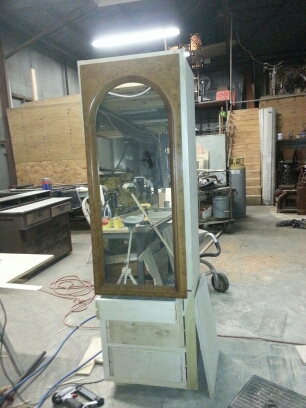
The mirror covers the underlying door by about 1 1/2 inches so I couldn’t find any conventional hinges that would open that far. I mounted the hinges to custom made sliding brackets. This allows the mirror to be pulled forward away from the cabinet frame, allowing it to open.
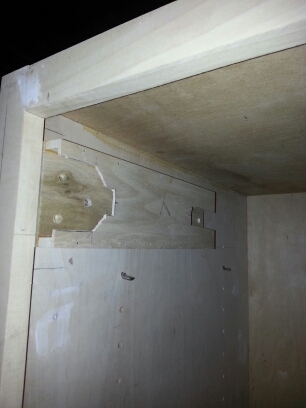
Drawers use shop made wooden runners etc…
The original plate separating the first and second floors is post and beam construction using mortise and tenon joinery and wooden pins. Approximately 40 feet of the plate had to be replaced. The first and second floors were reinforced and then slightly separated. The old plate was removed in sections. The new plate was constructed in place using a laminating technique. Lumber was planed and then glued and screwed together.

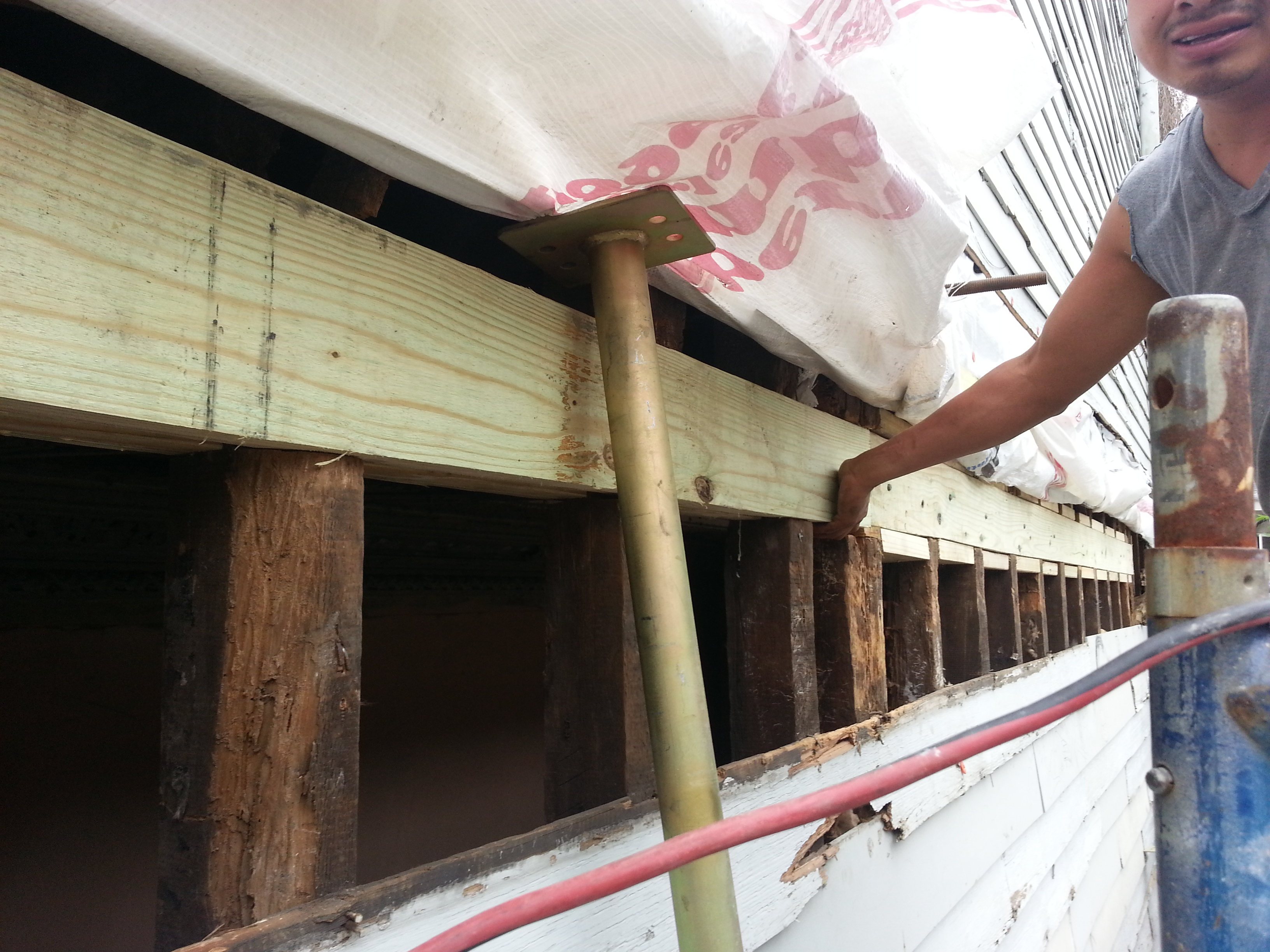
The new plate consists of 3 pieces, two outer and an inner piece, notched to create a mortise pocket when the pieces are assembled. This allowed the new plate to have mortise pockets to receive the stud tennons, long plate sections to be joined as one piece, and post mortise pockets to receive the plate tennons. Thus the replacement plate is installed maintainng the original post and beam construction.

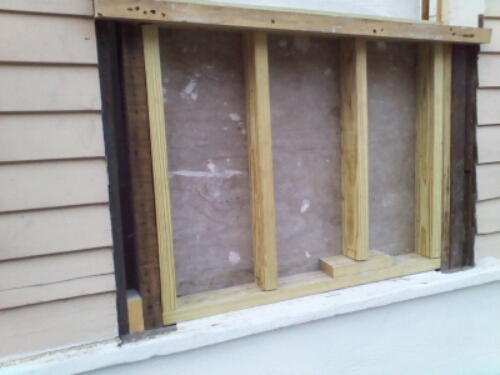
We demoed the front steps, converted the door frame to a window frame, fabricated a section of 16″ watertable board, and blended new siding into the old.

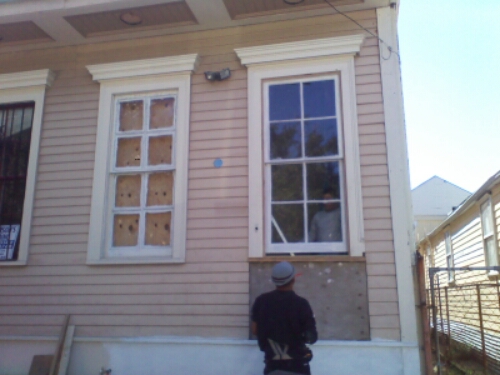
Window sash was resized to fit.

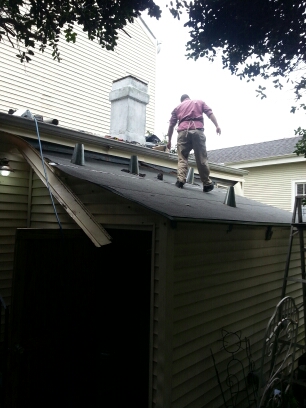
I initially thought there was just a minor leak, however the damage was fairly extensive. There seemed to be several potential leak sources, one of which is the roof to wall connection, that is part of another (kitchen) roof. There is a second roof that drains toward this lower shed roof.

Sub-standard construction complicated the repair. Luckily, I had some old 1 inch thick by 6 inch wide deck planks that I could use to reinforce the roof structure.
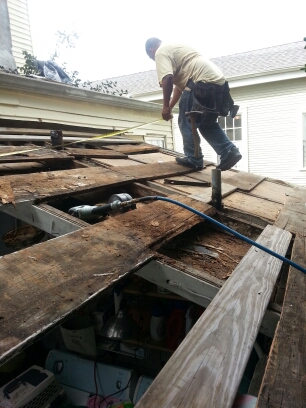
I’m trying do a relatively modest repair here, but the irregularities are a nuisance. The shed is made from salvaged materials. I decided to go with a 5/8 cdx plywood deck as I tend to avoid 1/2 plywood unless it is used over tightly spaced planking.
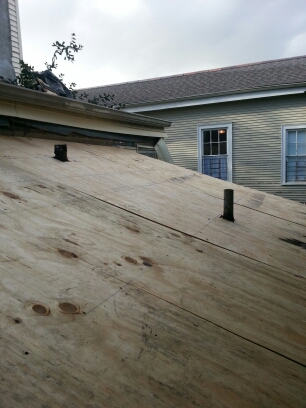
This roof only measures about 8 x12 ft. Rather than using mineral paper underlayment, I decided to use Libertybase Sheet. It is a superior product, but costs at least 5 times more than mineral paper. This base sheet can be installed without nails and it has an adhesive backing. The trick is to prime the deck with a special primer. The primer bonds to the wood and creates a substrate that the base sheet will adhere to. The base sheet bonds to the deck. It will not be removable.
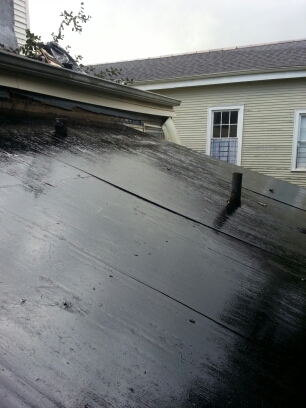
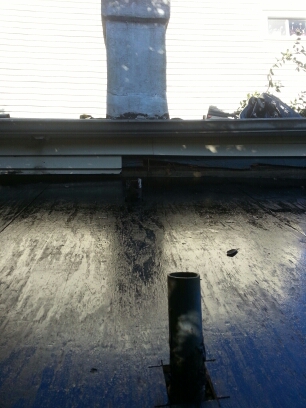
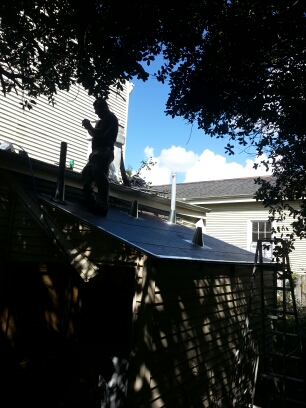
The Liberty Cap sheet has an adhesive backing that bonds to the base sheet so, no nails are required for this roof. No nails = no holes and no way for water to get between the base sheet and plywood.

 LAGNIAPPE SERVICES LLC